Iris Schmidt · 4 October 2026
Analyzing Encryption Standards and Their Influence on User Trust in Multi-Device Note Platforms
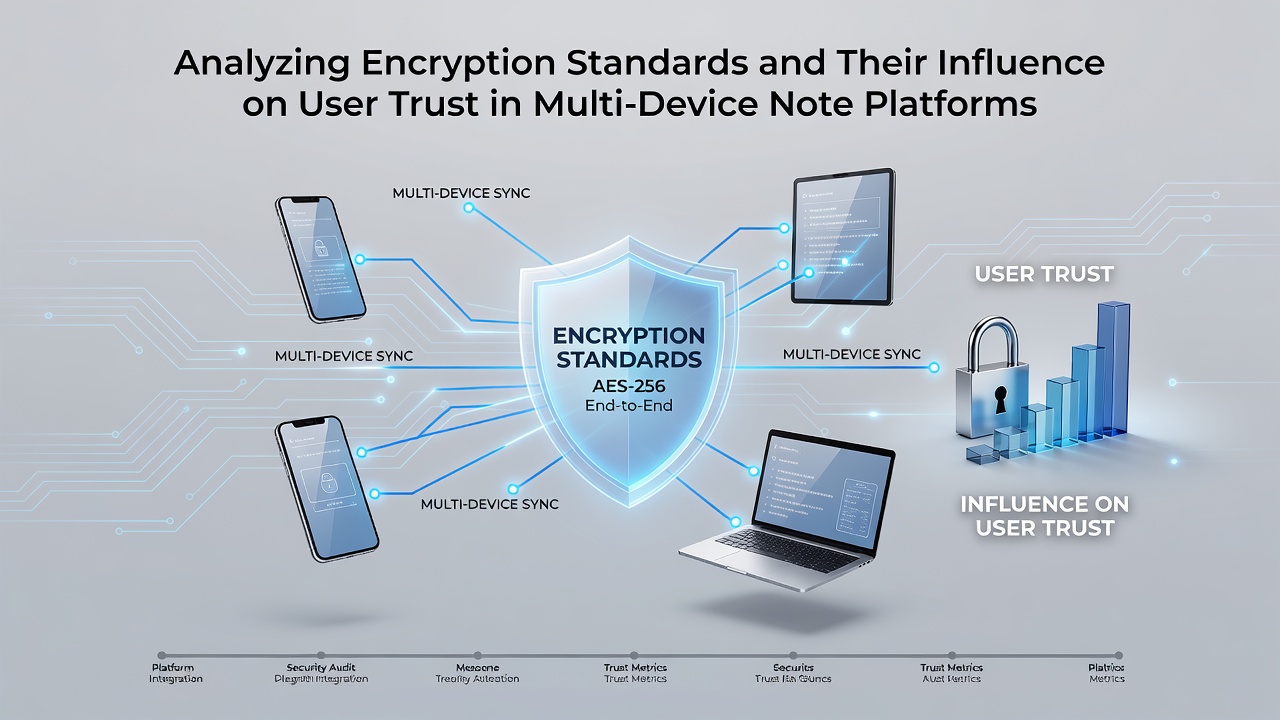
Encryption standards form the backbone of data protection in multi-device note platforms where users expect seamless access across phones, tablets, and computers without exposing sensitive information during transfers or storage. Standards such as AES-256 and protocols built around TLS 1.3 handle the heavy lifting in these environments, while newer implementations incorporate elements of post-quantum cryptography to prepare for emerging computational threats. Observers note that platforms adopting these measures often report higher retention rates because users perceive their notes as secure even when files sync across international servers.
Core Encryption Methods in Note Synchronization
Multi-device note platforms rely on end-to-end encryption paired with zero-knowledge architectures so that service providers cannot access plaintext content even if compelled by legal requests. Researchers at various institutions have documented how AES-256 serves as the default symmetric cipher in most commercial offerings, while asymmetric keys manage device authentication during initial pairing. Data shows that when a user adds a new device, the system generates fresh key pairs and distributes them through secure channels, a process that minimizes exposure windows compared to older shared-secret models.
But here's the thing: not every platform implements these standards identically, which creates measurable differences in how users evaluate trustworthiness. One study from a North American research group tracked adoption rates and found that applications disclosing detailed cipher suites and key rotation schedules experienced fewer account deletions following publicized breach attempts. In contrast, vague descriptions of "military-grade encryption" correlated with lower confidence scores in user surveys conducted across multiple regions.
Regional Regulatory Influences on Standards
Government bodies shape encryption expectations differently depending on jurisdiction. The National Institute of Standards and Technology in the United States maintains detailed guidelines for cryptographic modules that many note platforms reference when certifying their systems. Meanwhile, the European Union Agency for Cybersecurity publishes its own assessments that emphasize forward secrecy and resistance to mass surveillance techniques. Platforms operating across borders frequently align with both sets of recommendations to maintain compliance and user confidence in markets from North America to the Asia-Pacific region.
What's interesting is how these regulatory frameworks intersect with actual user behavior. Figures from industry reports reveal that after major standard updates, such as the transition toward quantum-resistant algorithms, platforms that communicated changes clearly saw trust metrics stabilize faster than those that remained silent. In October 2026, several organizations plan to roll out updated libraries incorporating lattice-based schemes, a move expected to influence how developers rebuild synchronization pipelines for future device fleets.
Trust Metrics and Platform Comparisons
Survey data collected by academic teams indicates that encryption transparency directly affects whether users enable multi-device features at all. When platforms publish independent audits verifying proper implementation of TLS handshakes and authenticated encryption modes, adoption of cross-device workflows rises noticeably. One case involved a European note service that released third-party verification results; researchers observed a subsequent increase in active multi-device users within six months.
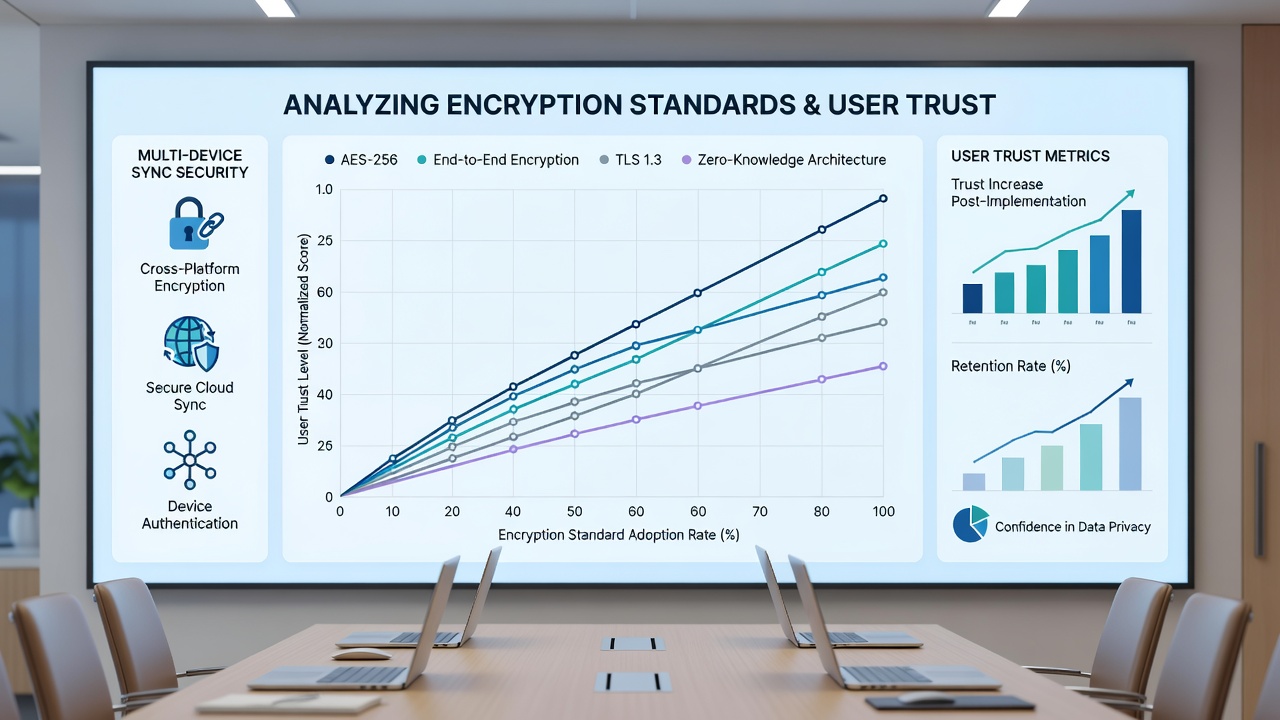
Yet the relationship between standards and trust extends beyond technical specifications. People often examine how quickly a platform responds to known vulnerabilities, such as padding oracle issues or weak random number generation. Those who have studied incident response timelines report that rapid patching combined with clear user notifications tends to preserve confidence even when initial weaknesses surface. Conversely, delayed disclosures have led to measurable drops in daily active users across several services.
Emerging Challenges with Device Proliferation
As users add wearables, smart home hubs, and additional mobile devices, key management complexity grows. Experts tracking these trends point out that platforms must balance usability with strict separation of encryption keys per device. Research indicates that systems employing per-device sub-keys derived from a master secret maintain stronger isolation properties while still allowing efficient sync operations. Data from 2025 deployments suggests that users who understand these mechanics through in-app explanations are more likely to continue using the service long-term.
And here's where it gets interesting: academic papers from Australian universities have explored how cultural perceptions of privacy intersect with encryption visibility. Their findings show that users in regions with stronger data-protection laws respond positively to granular control over which devices can decrypt specific note folders, a feature enabled by advanced key hierarchies. Platforms incorporating such controls have documented steadier growth in enterprise accounts compared to those offering only all-or-nothing access models.
Conclusion
Encryption standards continue to evolve alongside device ecosystems, directly shaping how users assess the reliability of multi-device note platforms. Organizations that align with established guidelines from bodies like NIST and ENISA, while providing transparent audit information, consistently demonstrate stronger user retention patterns. As October 2026 approaches and new post-quantum implementations enter wider testing, the platforms that communicate these transitions effectively stand to reinforce existing trust levels across diverse user bases. Continued monitoring of adoption data will clarify which approaches deliver the most durable security posture in an increasingly connected environment.