Rafael Otto · 6 September 2026
Examining the Architecture Behind Cross-Platform Note Synchronization in SaaS Environments
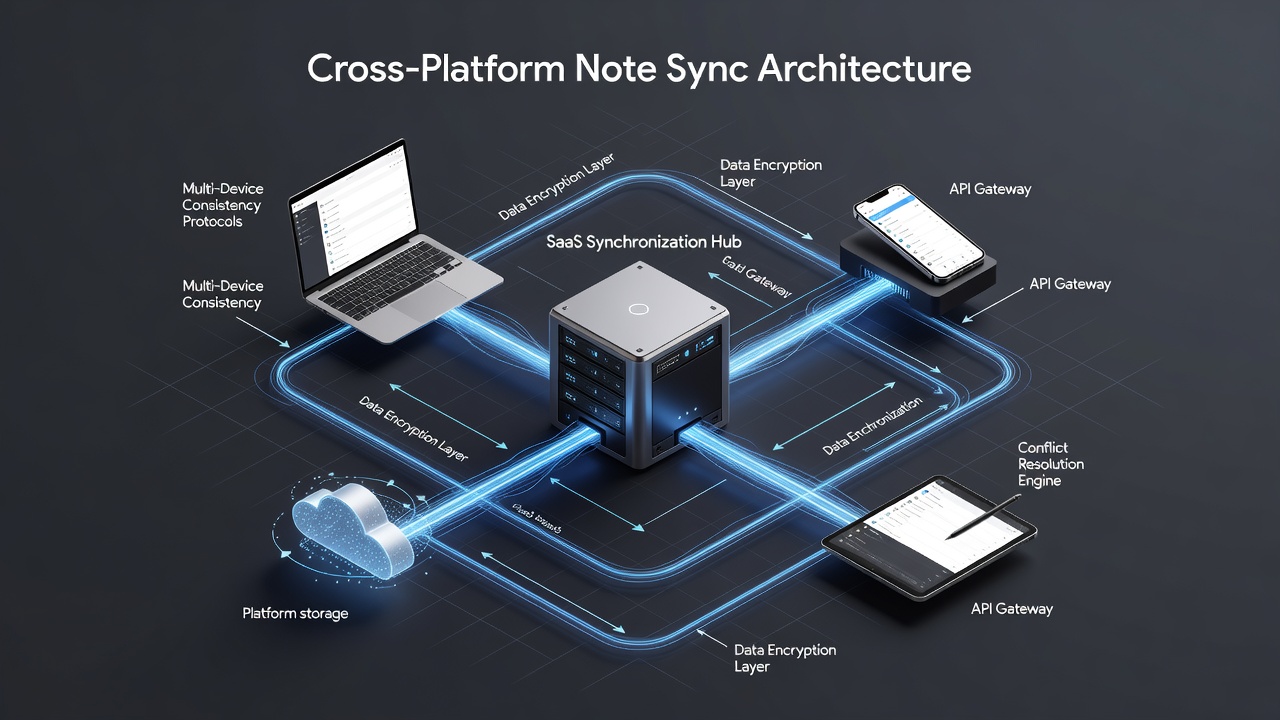
Cross-platform note synchronization in SaaS environments relies on layered architectures that connect clients across operating systems with centralized services, and these systems handle data consistency through protocols that resolve conflicts while maintaining availability during network partitions. Developers design the core components around client applications that run on mobile devices, web browsers, and desktop platforms, while backend servers manage storage, authentication, and replication tasks that keep notes aligned in real time or near real time.
Core Components of the Synchronization Stack
Client layers capture user edits locally before transmitting changes through APIs that use formats such as JSON or Protocol Buffers, and these transmissions occur over HTTPS connections that incorporate token-based authentication to verify each device session. Backend services then process incoming updates using distributed databases that support eventual consistency models, which allow replicas in different geographic regions to converge without requiring immediate global locks. Observers note that this approach reduces latency for users who edit notes while traveling between time zones, since regional nodes handle writes before propagating results through gossip protocols or message queues.
Storage architectures often combine relational databases for metadata with document stores for note content, and this hybrid setup supports queries that track version histories alongside full-text searches. Engineers implement change logs that record every modification with timestamps and device identifiers, which enables rollback operations when conflicts arise during concurrent edits from multiple users.
Conflict Resolution Mechanisms
Operational transformation techniques adjust incoming changes to preserve user intent, while conflict-free replicated data types provide an alternative that merges updates automatically based on commutative operations. Researchers at institutions such as the University of Melbourne have examined how CRDTs scale in multi-tenant SaaS deployments, and findings indicate reduced server load during peak collaboration periods. Systems that blend both methods detect simple merges through vector clocks yet escalate complex overlaps to user prompts when semantic meaning diverges.
Network and Platform Adaptations
Cross-platform compatibility demands abstraction layers that translate between native file systems on iOS and Android, browser storage APIs in web environments, and file watchers on Windows or macOS. Synchronization clients detect connectivity changes through background services that queue operations for later transmission, and they compress payloads to minimize data usage on cellular networks. In September 2026, updates to WebSocket standards are expected to introduce more efficient binary framing options that further streamline these exchanges for SaaS providers managing large note volumes.
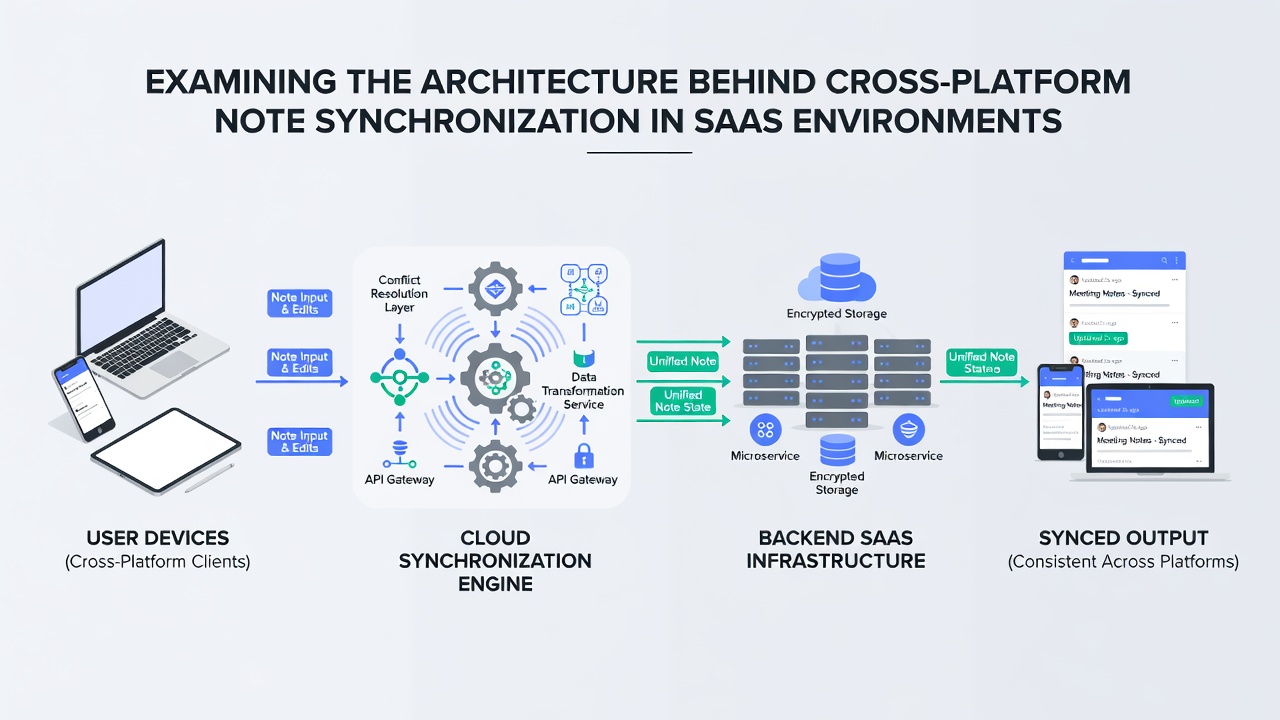
Security layers integrate end-to-end encryption for note content while allowing servers to perform indexing on encrypted metadata, and compliance frameworks require audit trails that log access events without exposing plaintext. Data residency rules in various jurisdictions influence node placement decisions, since organizations must route synchronization traffic through approved regions to meet regulatory requirements.
Scalability Patterns in Production Environments
Load balancing distributes synchronization requests across containerized instances that auto-scale based on queue depth metrics, and caching layers store frequently accessed notes in memory to accelerate read operations. Observers note that sharding strategies partition note collections by user or workspace identifiers, which prevents hotspots during company-wide collaboration sessions. Metrics from industry reports show that successful implementations achieve sub-second sync times for documents under 50 megabytes when using optimized delta encoding.
Monitoring tools track replication lag and conflict rates, which feed into dashboards that alert operations teams when thresholds indicate emerging bottlenecks. One study from a Canadian research consortium revealed that proactive compaction of change logs improves recovery times after partial outages by up to 40 percent.
Conclusion
Architecture choices in cross-platform note synchronization determine both performance characteristics and operational resilience for SaaS offerings, and ongoing refinements continue to address evolving device ecosystems alongside stricter data governance expectations. Teams that prioritize modular designs and proven consistency models position their platforms to handle increasing user bases without compromising reliability across regions.